
Why Heritage Learners Choose to Learn Tamil
For heritage learners, Tamil serves a very different purpose than a foreign language does. It's woven into family relationships, cultural continuity, and personal identity. Understanding why you want to learn helps you choose the right path — and stay motivated when life gets busy.
Preserving culture and identity
Language is the doorway to tradition. So much of Tamil literature, music, history, and ritual carries layers of meaning that simply don't survive translation. When you learn Tamil, you engage with these practices on their own terms — and you become able to pass that understanding on to your children rather than watching it fade.
Research on heritage language learning (Science Gate, 2025) suggests that maintaining a heritage language does more than preserve culture. It also strengthens cognitive flexibility, analytical thinking, and social awareness — benefits that reach well beyond the language itself.
Strengthening family communication
For many families, Tamil is the language of the heart. Parents, grandparents, and extended relatives are often far more comfortable expressing themselves in it. When you improve your own ability, you stop sitting on the edge of conversations and start joining them fully.
Consider the small but meaningful moments this unlocks:
- Chatting easily with grandparents instead of relying on others to translate
- Catching the jokes, sayings, and affection that don't quite land in English
- Sharing festivals and family rituals in their original language
- Helping your own children grow up confident in their heritage
Quick win: even a handful of warm, well-chosen phrases can transform the tone of your next family gathering.
Personal, academic, and professional value
While most heritage learners come to Tamil for personal reasons, the rewards often stretch further. Stronger Tamil can support academic study, cultural work, education roles, and any career where genuine multilingual ability is valued — and it deepens your connection to Tamil-speaking communities both here and around the world.
What Each Level of Tamil Study Looks Like
The clearest route to confidence runs through well-structured levels. Because you already bring cultural familiarity, you can usually start higher than a complete beginner — entering at the point that matches your real ability rather than starting from scratch.
Basic Tamil: building solid foundations
Beginner-level courses focus on giving you a clear, confident start. They're ideal if you understand some spoken Tamil but have had little formal training. At this stage, you'll typically work on:
- Tamil letters and accurate pronunciation
- Common vocabulary and everyday phrases
- An introduction to basic grammar
- Simple reading and writing practice
Don't worry if the script feels daunting at first — good instruction introduces it gradually, so each piece builds naturally on the last.
Intermediate Tamil: expanding your range
Once the basics feel comfortable, intermediate courses widen what you can say and understand. They suit learners who already chat informally but want greater accuracy and fluency. You'll usually develop:
- More complex sentence structures
- The ability to read short texts and simplified literature
- Conversational skills for social and cultural settings
This is the stage where many learners notice a real shift — moving from getting by to genuinely holding their own in a conversation.
Advanced Tamil: speaking with depth and nuance
Advanced courses are designed for learners seeking deeper mastery, whether for cultural, academic, or professional reasons. Development here often includes:
- Reading classical and modern Tamil literature
- Discussing culture, history, and social themes with confidence
- Essay writing, storytelling, and more formal expression
By this point, Tamil starts to feel less like something you translate in your head and more like a language you simply think in.
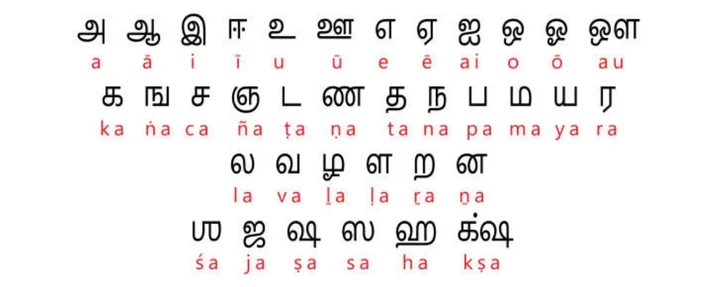
““எண்ணென்ப ஏனை எழுத்தென்ப இவ்விரண்டும் கண்ணென்ப வாழும் உயிர்க்கு.” “Numbers and letters are the two eyes of living beings.”Thiruvalluvar, Tirukkural
Choosing the Right Course and Making It Last
The course you choose matters just as much as your motivation. The right fit keeps you engaged, builds confidence quickly, and turns good intentions into steady, visible progress.
What to look for
Heritage learners get the most from courses built with their experience in mind. As you compare your options, weigh up these factors:
- Your learning goals — are you after everyday conversation, literacy, or deeper cultural understanding?
- The teaching approach — interactive, speaking-led practice beats dry, theory-heavy study every time
- Schedule and format — group or private lessons that genuinely fit around work and family life
- Programme reputation — clear structure, experienced instructors, and real learner support
Choosing based on fit rather than speed is what sustains learning over the long run.
Learning with Lingua Learn Singapore
Lingua Learn Singapore offers Tamil courses designed specifically for heritage learners — people who bring cultural familiarity but arrive with varying levels of proficiency. Key features include:
- Instructors experienced in working with heritage learners
- Small group sizes for genuine individual attention
- A focus on practical communication and cultural understanding
- Flexible scheduling that suits busy adults and families
Live, interactive sessions over Zoom or MS Teams mean you get real-time feedback and plenty of speaking practice — without a commute eating into your evening. You can explore the wider range of private adult learning offerings to find the path that fits you best.
The lasting rewards of learning Tamil
The benefits of developing your Tamil tend to grow over time, well beyond the lessons themselves:
- A stronger cultural identity and sense of belonging
- Warmer, easier communication within families and communities
- The cognitive and academic advantages linked to bilingualism
- Deeper engagement with Tamil-speaking networks, locally and internationally
For most heritage learners, the experience brings a quiet but real boost in confidence — and a renewed pride in where they come from.
Taking Your First Step Back to Tamil
Reconnecting with Tamil works best when you choose a course with purpose, a format that fits your life, and a commitment to steady practice. With the right support and consistent effort, both adults and families can build meaningful proficiency while preserving something precious about who they are.
If you've been waiting for the right moment, consider this your gentle nudge. Picture the next family gathering where you follow every word, answer your grandparents with ease, and feel completely part of the conversation. That moment is closer than it feels — and it begins with a single, structured first lesson. Why not take that step today?