How English Runs the Hotel Yet Language Still Defines the Guest Experience
The Difference Between a Functional Service and Luxury
To understand why language matters so much in hospitality, it helps to separate two different layers of service that exist in almost every hotel.
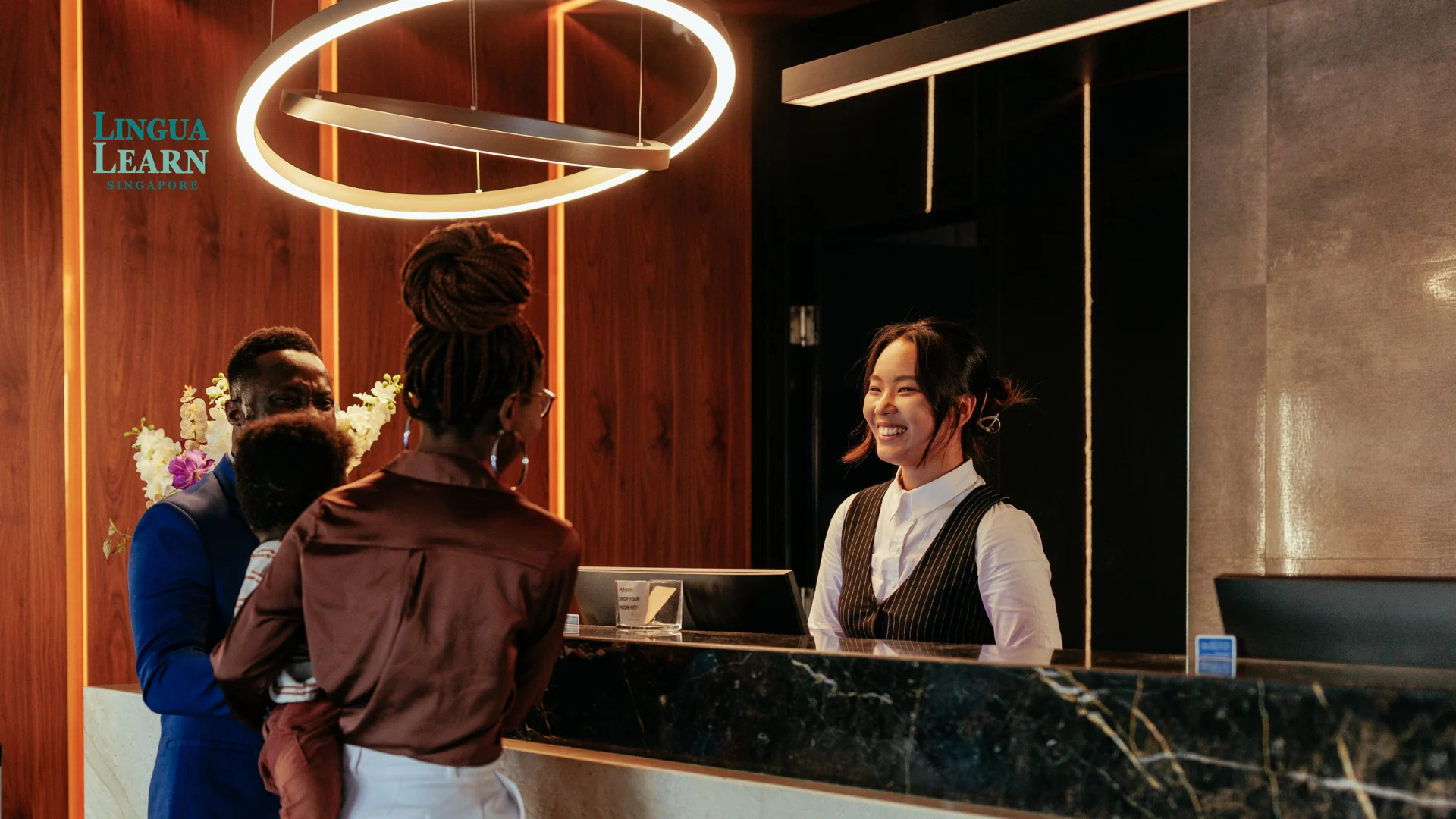
The first is functional service. This is the basic layer that keeps a hotel running. Guests check in, ask for directions, request extra towels, book a taxi, or confirm their breakfast time. As long as the information is clear and polite, the interaction does its job.
In Singapore, English handles this level of service extremely well. It provides a shared language between staff and guests, and between departments behind the scenes. For most day-to-day interactions, that common language is more than enough.
But five-star hospitality is not built on functional service alone.
Guests staying at premium hotels are rarely judging the experience purely on efficiency. They are paying attention to smaller details: whether a recommendation feels thoughtful rather than rehearsed, whether a complaint is handled with confidence, whether the interaction feels natural or slightly mechanical.
Those moments are where language starts to matter in a completely different way.
This distinction is not just theoretical. Some of the world's most respected hotel brands have built entire service frameworks around it.
Maybe the most well-known example comes from The Ritz‑Carlton Hotel Company. The brand's service culture is built around what it calls the Gold Standards, a framework that guides how employees interact with guests across all Ritz-Carlton properties.
At the centre of that framework are the Three Steps of Service:
- A warm and sincere greeting, ideally using the guest's name
- Anticipation and fulfilment of each guest's needs
- A fond farewell, again using the guest's name
The key idea sits in step two: staff are expected to anticipate and fulfil guest needs, not simply respond to requests. In other words, the goal is to recognise what the guest might need before they have to ask.
That shift — from responding to requests to anticipating them — is exactly what separates functional from luxury service.
A guest asking about local restaurants, for example, is not just looking for information. They are looking for guidance that feels personal. The tone, the phrasing, even the rhythm of the conversation all shape how that interaction lands.
The same is true when something goes wrong.
Anyone who has worked in hospitality knows that problems are unavoidable. Rooms aren't ready, reservations get mixed up, luggage goes missing. What determines the guest experience is rarely the problem itself. It's how the situation is explained and resolved. A guest might still receive the same solution either way. But that's not the point.
In an industry where hotels invest millions designing every detail of the guest experience, those small moments matter.
Where Language Shapes Guest Experience
If luxury hospitality is built on anticipation, tone and emotional intelligence, then language inevitably becomes part of the guest experience itself.
This is where the conversation usually moves beyond simple translation. Hotels are not trying to communicate facts alone. They are trying to create an interaction that feels natural, reassuring and personal. The same sentence can land very differently depending on how it is phrased, the cultural context behind it, and the expectations a guest brings with them.
Take something as ordinary as a restaurant recommendation.
A concierge might say, "There are several good restaurants nearby," and provide directions. The information is correct and the guest receives exactly what they asked for. Great, job done.
But a more fluent and culturally aware conversation might sound slightly different. The concierge might ask where the guest is visiting from, suggest a restaurant that aligns with their tastes, explain a local dish or even describe the atmosphere of the neighbourhood in a way that makes the recommendation feel personal rather than transactional.
The information is still the same, yet the experience feels completely different.
Language plays an even bigger role when something goes wrong.
What determines how the guest remembers the incident is often not problem itself – life happens. More often, it is how the situation is resolved.
A confident explanation delivered with the right tone can immediately reduce tension. A hesitant or awkward explanation, even if technically correct, can make the situation feel worse.
In those moments, communication becomes part of the service experience.
Luxury hotels already understand this when they train staff to read guest behaviour, anticipate needs and maintain composure under pressure. Language training simply adds another layer to that same skill set.
Why a Handful of Multilingual Staff Quietly Carry the Communication Load
The Hidden Role of Multilingual Staff
Once you start paying attention to language inside hotels, you notice another pattern fairly quickly.
A lot of the real communication work is quietly carried by a handful of multilingual staff.
There's usually no policy about it. But everyone on the team knows who to look for when a conversation becomes difficult.
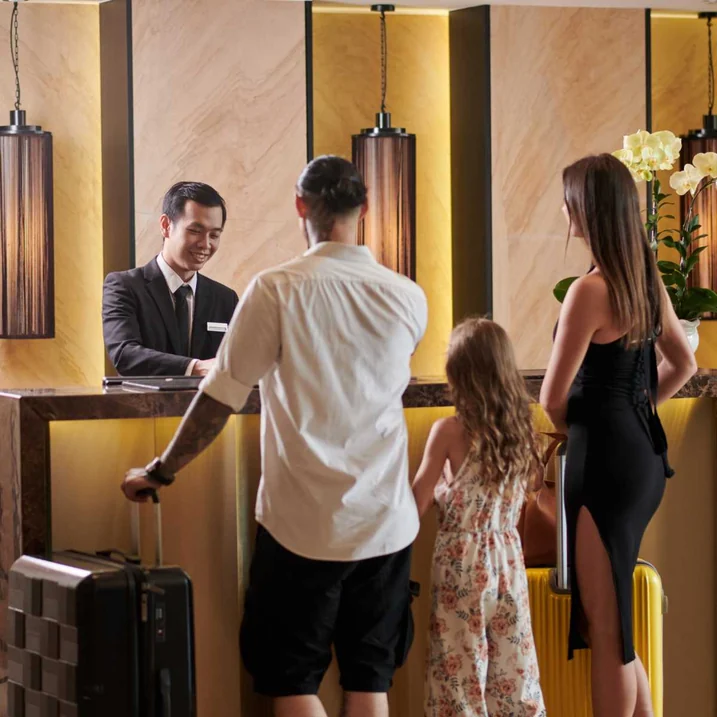
A receptionist might suddenly switch into Bahasa Indonesia when a family from Jakarta struggles to explain a reservation issue. A concierge who speaks Japanese might step in when a couple needs help understanding train routes or local customs. Someone in the restaurant might know just enough Arabic to help explain a menu or dietary question.
The moment usually plays out the same way. A guest hesitates while trying to explain something in English. A staff member recognises the language being spoken. Someone else quietly says, "Hey, can you help here?"
And within seconds the entire interaction changes.
The guest relaxes. The explanation becomes easier. The conversation flows naturally instead of feeling slightly awkward.
From the guest's perspective it looks like excellent service. The hotel suddenly seems incredibly attentive and capable.
Behind the scenes, though, what actually happened was much simpler. One person on the team happened to speak the right language at the right moment.
Over time these multilingual employees become the unofficial communication bridges of the building. Colleagues remember who speaks what and instinctively bring them into situations where language becomes a barrier.
Why Language Training Isn't Treated Strategically
At this point the obvious question starts to appear.
If language plays such a visible role in guest interactions, why don't hotels treat it as part of their service strategy?
The short answer is that hospitality tends to solve language problems in a very practical way. If someone on the team already speaks the language, great. If not, English usually gets the job done well enough.
Hotels are operational machines. Staff are trained on brand standards, reservation systems, safety procedures, guest recovery protocols and dozens of small details that keep the property running smoothly every day. When training schedules are tight and shifts are rotating, those operational priorities naturally take the front seat.
Part of the reason is time. Learning a language is not like learning a new reservation tool or service checklist. Developing the confidence to use another language with guests takes time and consistent practice, which is why structured language training programmes can make such a difference in hospitality environments. For many hotels, it feels easier to simply hire someone who already speaks the language rather than build that capability internally.
So, language becomes something closer to a personal skill than a structured part of the service model.
You see it in job interviews all the time. A candidate mentions that they speak Japanese or Arabic or Bahasa Indonesia and suddenly that becomes an extra advantage. It's useful, but it's still treated as something the individual brings with them rather than something the organisation intentionally develops.
“The customer’s perception is your reality.Kate Zabriskie
How a Changing Guest Landscape Is Turning Language Into Deliberate Service Design
The Changing Guest Landscape
One reason this conversation is starting to matter more is that the profile of the international traveller has changed quite a bit over the past decade.
Singapore has always been a global destination, but the balance of visitors today looks different from what it did fifteen or twenty years ago. Travel growth across Asia has been enormous, and a large share of visitors now come from within the region itself.
Not only that, but people have also become far more informed. Guests arrive with detailed knowledge about destinations, hotels and restaurants long before they step into the lobby. Reviews, travel videos and booking platforms have made it easy to compare experiences across cities and across brands.
That means travellers are no longer judging hotels purely on facilities or location. Increasingly, they remember the interactions.
More travellers inevitably means more interactions. More questions, more recommendations, more situations where staff need to explain something clearly or resolve a problem quickly.
And the more interactions there are, the more noticeable communication becomes.
Luxury hospitality has always been built on small details. As travel continues to grow across the region, the way those conversations happen is quickly becoming one of the details that shapes how guests remember their stay.
Language as Part of Service Design
Hospitality already has a long tradition of turning informal behaviours into deliberate service practices. Greeting guests by name, maintaining eye contact, anticipating needs and recovering from service failures were not always formal skills either. Over time, hotels recognised that these interactions shaped the guest experience and began training staff to handle them consistently.
Language sits in a similar position today.
English will continue to hold the operational side of Singapore hospitality together. That isn't going to change anytime soon.
But the small conversations happening in the lobbies, at concierge desks and on restaurant floors will keep shaping how guests experience the stay.
And sometimes the difference between good service and truly memorable hospitality is surprisingly simple.
It's the feeling that someone understood what you were trying to say.