
What You Can Realistically Achieve in 90 Days?
Achieving fluency after 90 days means mastering practical, everyday communication rather than discussing complex philosophical topics. While you will not be writing ancient poetry after three months, you will achieve a highly functional level of spoken Chinese. These foundational stage are officially known as CEFR A1 and A2 Mandarin.
At the most basic, CEFR A1 Mandarin defines the ability to introduce yourself, ask simple questions, and understand basic, everyday phrases. At this level, a learner can tell someone their name, state where they live, mention their profession, and ask the other person corresponding questions. You do not need a massive vocabulary to start speaking; you just need the right functional vocabulary. Focusing on high-frequency words allows you to navigate daily life long before you master the thousands of characters required for full professional working proficiency.
To put this into perspective, consider English: the Oxford English Dictionary lists more than 170,000 English words in current use, but most native speakers use only about 1,000 to 3,000 words in daily conversation. This means the majority of communication happens with a relatively small set of familiar, functional words—and the same principle applies when learning Mandarin.
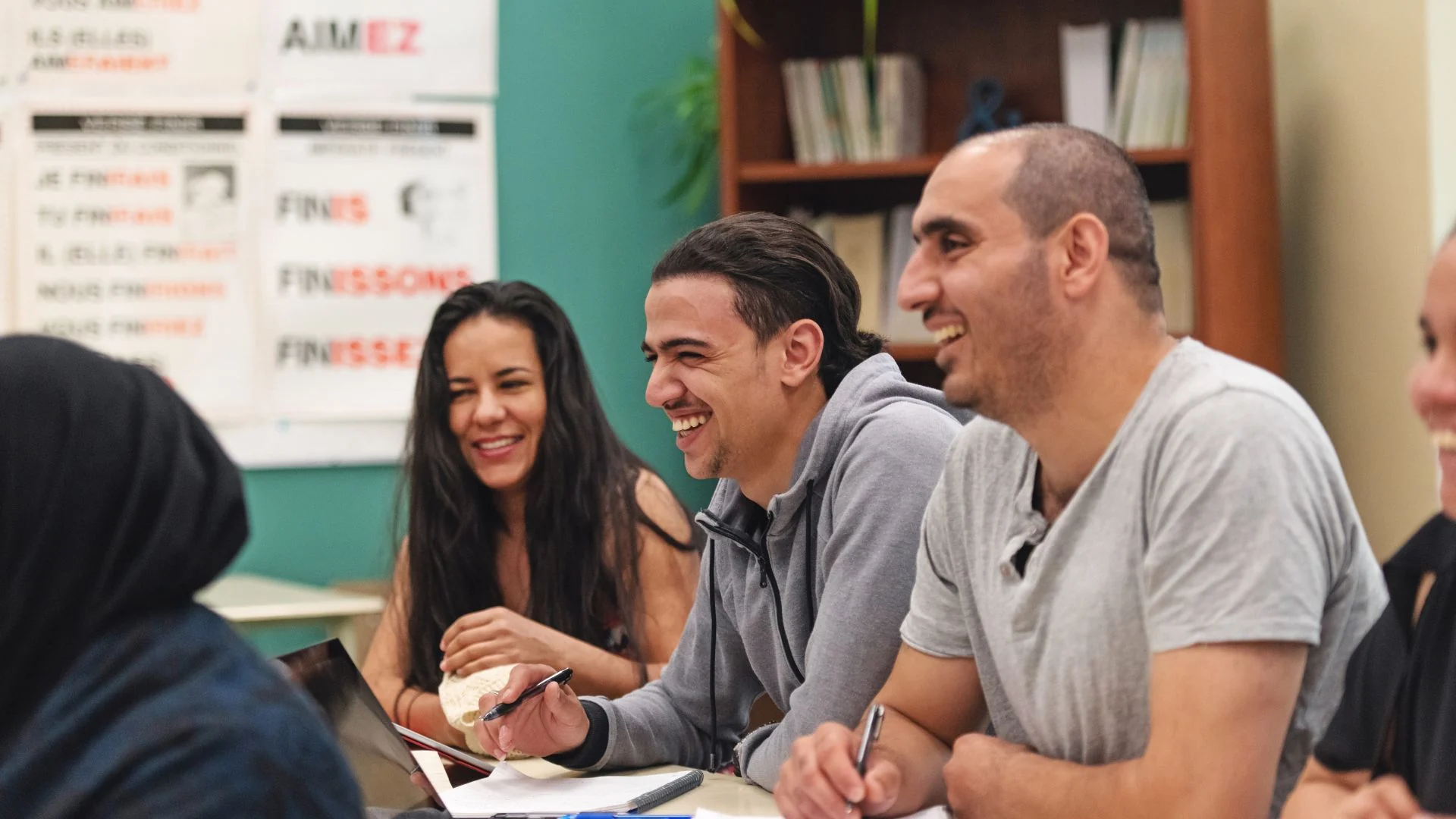
Adult learners who commit to live instruction experience several immediate wins within their first few weeks of Basic Chinese classes. These early victories build the foundation for long-term success. The most common milestones include:
- Reduced hesitation: Students spend less time translating sentences in their heads and begin responding naturally to common questions.
- Better pronunciation: Live instructor feedback helps learners correct their pronunciation of the four Mandarin tones early, preventing bad habits from forming.
- Improved listening comprehension: Regular exposure to a native-speaking teacher trains the ear to pick up keywords in fast-paced conversations.
- Confident greetings: Learners can successfully initiate and conclude conversations using culturally appropriate phrases.
How Mandarin Improves Daily Life and Career Prospects in Singapore?
How does conversational Mandarin improve daily life in Singapore?
Conversational Mandarin instantly improves weekend outings, networking events, and daily interactions across Singapore. In fact, around a third of Singapore residents speak Mandarin regularly at home, according to the Singapore Department of Statistics (SingStat). Because of this, learning basic phrases immediately breaks down social barriers.
Ordering food at a hawker centre provides a perfect real-world application for your new language skills. Instead of pointing at a menu and speaking English, a learner with three months of training can confidently say, "I would like one plate of chicken rice, to eat here, please" (Wǒ yào yī fèn jīfàn, zài zhèlǐ chī). Furthermore, that same learner can give precise directions to a taxi driver, asking them to turn left, turn right, or stop at the upcoming road. (This was a life-saver for me when I lived in Shanghai!).
Mastering this specific conversational Mandarin builds immediate confidence because the feedback loop is instantaneous. When you successfully order a meal and the vendor smiles and responds in Mandarin, you experience a tangible reward for your hard work. This positive reinforcement motivates you to continue studying and practising.
Engaging with locals in a native language also builds stronger community connections. Taking the time to learn Mandarin in Singapore demonstrates respect for the local culture. Neighbours, shop owners, and colleagues appreciate the effort adult learners put into speaking their language. This simple act of trying often leads to warmer interactions, better service, and deeper personal relationships throughout the city.
Why is Singapore Business Mandarin important for career advancement?
In Singapore, business Mandarin directly supports career advancement by enabling professionals to communicate effectively with Chinese-speaking clients, partners, and colleagues. In a highly competitive corporate landscape, technical skills will only take you so far. The ability to build genuine rapport dictates who wins contracts, who earns promotions, and who successfully leads cross-cultural teams. A 2026 report by Robert Walters found that bilingual employees can command higher salaries than their non-bilingual counterparts, with premiums of up to 10% for Mandarin and Japanese speakers in Singapore's tech sector.
Within three months of targeted learning, professionals acquire highly practical business skills. You will learn how to greet clients appropriately based on their seniority. You will be able to introduce your specific job role and explain your company's core services. Furthermore, you will understand basic workplace pleasantries, allowing you to participate in the casual "water cooler" conversations that often build the strongest professional bonds. Practical Mandarin for working adults focuses precisely on these high-impact scenarios.
Consider the case of a mid-level manager working for a multinational firm in the Central Business District. Before taking classes, this manager sat silently during the first five minutes of meetings while local colleagues chatted in Chinese. After just 90 days of structured instruction, the manager learned to confidently interject, ask colleagues about their weekend, and formally welcome visiting delegates from Taiwan. This small shift in communication changed the manager's internal reputation from "outsider" to an integrated, highly respected team member.
Live, interactive lessons are far superior to other means for grasping these professional cultural nuances. An app can teach you the vocabulary for a boardroom meeting, but an experienced instructor will teach you the proper tone, body language, and timing required to execute that vocabulary respectfully.

““千里之行,始于足下。” “A journey of a thousand miles begins with a single step.”— Chinese proverb
How Busy Professionals Can Build Mandarin Skills Quickly
Busy professionals build basic Mandarin skills quickly by participating in live, small-group classes that offer real-time error correction and flexible scheduling. The biggest barrier for working adults is not a lack of capability, but a perceived lack of time and a fear of making embarrassing mistakes.
Objections about time constraints are incredibly common. However, a modern language course mitigates this by offering flexible scheduling. Classes scheduled during evenings and weekends accommodate a working adult's lifestyle. This flexibility allows professionals to engage in consistent practice without causing any disruption to their careers. Showing up for just a couple of hours a week, supplemented by brief daily reviews, is entirely sufficient to maintain steady progress at the start of your learning journey.
The methodology of rapid improvement relies heavily on live instructor feedback. In a small group setting, teachers monitor each student's pronunciation and grammar. Real-time error correction stops learners from reinforcing incorrect tones. If you mispronounce a word during a self-study session on a mobile app, the software often fails to catch the nuance. If you make the same mistake in front of a live instructor, they correct you immediately and explain the mechanics of the proper sound.
Guided, structured speaking practice is the secret to reducing hesitation and speaking smoothly. By repeatedly practising role-play scenarios in a safe, supportive classroom environment, students overcome their fear of making mistakes. Once the fear disappears, the Basic Mandarin skills lock into place, transforming passive knowledge into active, confident communication.
Start speaking Mandarin with confidence today
Ninety days is entirely sufficient to master functional, everyday Chinese and basic professional greetings. Adult learners do not need years of isolated study to begin experiencing the benefits of bilingualism. By focusing on high-frequency vocabulary, practical workplace scenarios, and essential daily interactions, you can completely transform how you navigate Singapore.
Real progress comes from live, interactive practice rather than passive screen tapping. You need the guidance of an expert, the accountability of a scheduled class, and the immediate feedback that only a real conversation provides.
Take the next step in your career and personal life by committing to a structured learning path. Book a flexible, instructor-led course with Lingua Learn Singapore today – our programmes are designed specifically for working adults. Start your journey now and see immediate, real-world results in your daily communication.