

Why Learning Hindi Is Worth Your Time in Singapore
Singapore's linguistic diversity makes it a natural place to pick up Hindi, and the reasons people enrol are as varied as the learners themselves. Understanding why you want to learn shapes how you'll learn best.
The real reasons adults and families enrol
Most learners come to Hindi for one of a few practical, personal motivations:
- Cultural and heritage connection — supporting bilingual development and keeping your linguistic roots alive across generations.
- Professional relevance — useful for roles involving South Asia, cross-border collaboration, or simply building cultural rapport with colleagues and clients.
- Educational support — strengthening language foundations for students and curious lifelong learners.
- Travel and everyday communication — feeling confident and at ease when engaging with Hindi-speaking communities, whether on holiday or at home.
Whatever your reason, the good news is that Hindi learning in Singapore is generally structured and accessible. That makes it approachable for complete beginners and rewarding for those after longer-term development.
Heritage and family connection
For many families, Hindi carries the affection, humour, and traditions that don't always translate neatly into English. When you can chat easily with relatives, follow the family jokes, and share festivals in their original language, something meaningful clicks back into place.
Quick win: even a handful of warm phrases — a proper greeting, a few terms of endearment, a polite question — can change the tone of your next family gathering.
How Structured Hindi Courses Help You Progress
The clearest path to fluency runs through well-organised levels. Each stage builds on the last, so you always know where you are and what comes next.
Beginner Hindi: building solid foundations
Beginner courses are designed for learners with no prior exposure, and the focus is on a clear, confident start. You'll typically work on:
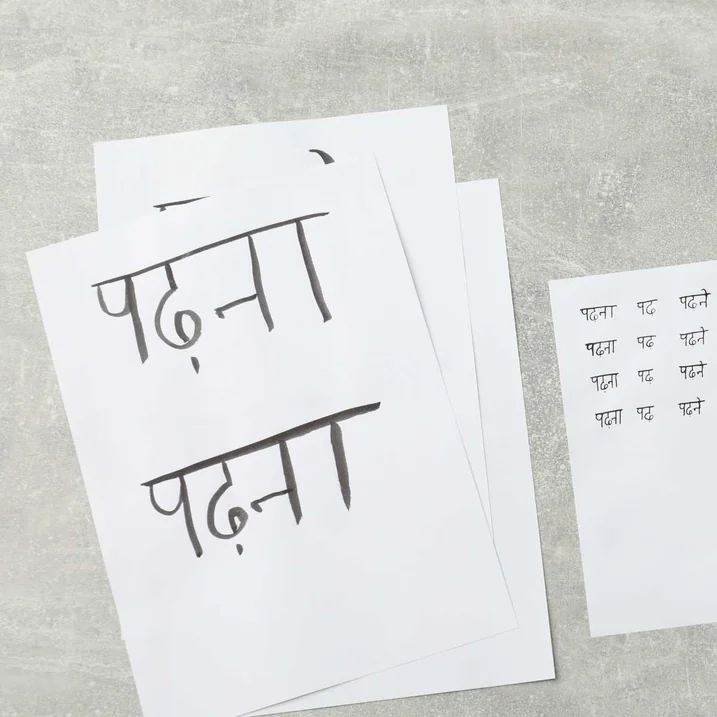
- An introduction to the Devanagari script
- Basic pronunciation and sound patterns
- Everyday greetings and common expressions
- Simple sentence construction
- Early listening and speaking confidence
Many quality programmes draw on recognised educational approaches used in formal instruction, similar to the frameworks provided by India's National Council of Educational Research and Training (NCERT). This grounding keeps your learning accurate from day one.
Intermediate Hindi: expanding what you can say
Once the basics feel comfortable, intermediate courses widen your range so you can handle more real situations. At this stage, you'll usually develop:
- Use of past, present, and future tenses
- More complex sentence structures
- Conversational Hindi for both work and social settings
- The ability to read short texts and narratives
- Listening comprehension using authentic materials
Exposure to genuine Hindi media — news, interviews, and cultural programming — helps your ear adjust to natural pace and contemporary usage. Resources such as BBC Hindi are an easy way to bring that real-world rhythm into your practice.
Advanced Hindi: speaking with nuance and confidence
Advanced courses are about fluency, accuracy, and cultural subtlety — ideal if you want to operate confidently in professional, academic, or formal settings. Development here often includes:
- Switching between formal and informal communication styles
- Advanced grammar usage
- Idioms and expressions that make you sound natural
- Public speaking and presentation skills
- In-depth reading and discussion
With consistent practice, you reach the point where you think and respond in Hindi without translating in your head first. That's the moment fluency starts to feel effortless.
““सीखने की कोई उम्र नहीं होती।” “There is no age for learning.”Hindi proverb
Choosing the Right Hindi Programme for You
The format you choose matters just as much as the curriculum. The best programme fits your goals, your schedule, and the way you naturally learn.
Hindi for adults
If you're a busy professional, you'll get the most from courses built around real life. Look for:
- Practical, conversation-led instruction
- Flexible scheduling that works around evenings and weekends
- Small group or private formats for focused attention
- Vocabulary aligned to your daily or professional needs
Live, interactive online sessions over Zoom or MS Teams let you practise speaking, get instant corrections, and build confidence — all without a commute eating into your evening.
Hindi for families and heritage learners
Family and heritage programmes are designed to nurture both language and identity. They typically support:
- Older children developing their cultural and linguistic identity
- Parents reinforcing bilingual habits at home
- Smoother, warmer communication within the family
- Confidence across reading, writing, and speaking
Lingua Learn's heritage and family Hindi courses offer age-appropriate instruction and culturally relevant materials, so everyone learns together at the right level. You can explore these at the family and heritage Hindi lessons page. For a fuller view of the adult programmes available, the main Hindi programmes page is a good place to start.
What good teaching actually looks like
High-quality programmes lean on learner-centred methods that prioritise using the language over memorising it. Keep an eye out for:
- Interactive speaking practice and role-play
- Everyday scenarios you'll genuinely face
- Visual and audio learning tools
- Grammar taught through context, not endless drills
- Ongoing feedback and clear progress checks
This blend keeps you engaged while making steady, visible progress.
How long will it take?
Your timeline depends on your starting point, your goals, and how consistent you are. As a rough guide for adult learners:
- Basic conversational ability: 3–4 months
- Intermediate fluency: 6–9 months
- Advanced proficiency: 12 months or longer
Regular attendance, a little practice between classes, and exposure to Hindi media will all speed things along.
Keep learning beyond the classroom
The fastest progress comes when lessons spill into daily life. A few easy habits make a real difference:
- Watch Hindi films, series, or news
- Listen to Hindi music or podcasts on your commute
- Read simple books or articles
- Chat with family or community members
- Weave small Hindi phrases into your daily routine
These small, repeated moments are what turn classroom knowledge into lasting fluency.
Ready to Take Your First Step?
Hindi classes work best when you choose them with a clear purpose, a format that suits your life, and a commitment to steady practice. With those three things in place, adults and families alike can build Hindi skills that strengthen everyday communication and deepen cultural connection.
So pick your goal, choose a structured programme that fits around your schedule, and book that first session. Picture the next family gathering where you join the conversation with ease, or the work call where you connect on a warmer level — that future is closer than you think, and it starts today.